MULTI-MAREX in Kalamata: Scientific Exchange, Fieldwork and Excursion Focused on Geohazards
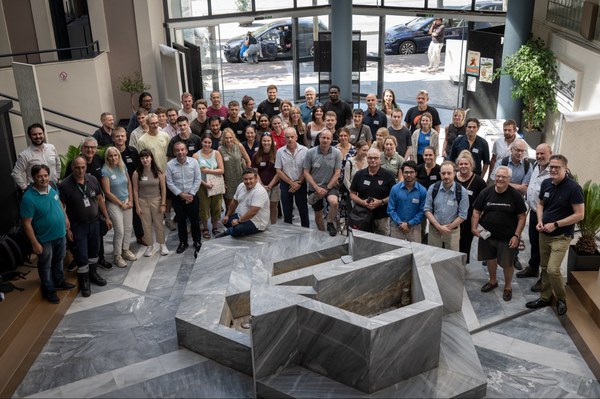
From 12 to 17 September 2026, the MULTI-MAREX Scientific Conference took place at the Cultural Centre Kalamata, marking 40 years since the 1986 Kalamata earthquake. The conference addressed seismic, volcanic and tsunami-related geohazards in coastal regions. Geoverbund ABC/J supported participation in the conference, open to students from across the entire network.
Scientific Conference
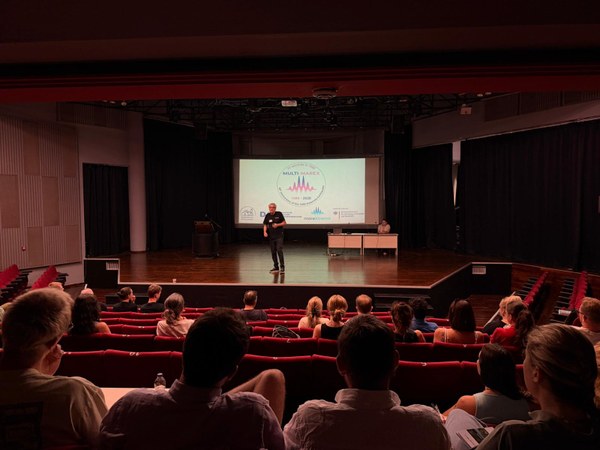
Talks centred on how risk management for coastal regions such as Kalamata can be implemented in practice — from hazard assessment to preparedness. International speakers approached the topic from various angles: Paraskevi Nomikou presented on the Aegean volcanic arc, Klaus Reicherter opened the session to a full auditorium, Holger Schüttrumpf spoke on tsunami mitigation with a focus on Kalamata, Andreas Vött outlined the region's tectonic setting, Dimitrios Papanikolaou and Ioannis Papanikolaou addressed active fault zones, and Athanassios Ganas presented current deformation data for the southwestern Peloponnese.
Student Conference and Workshops
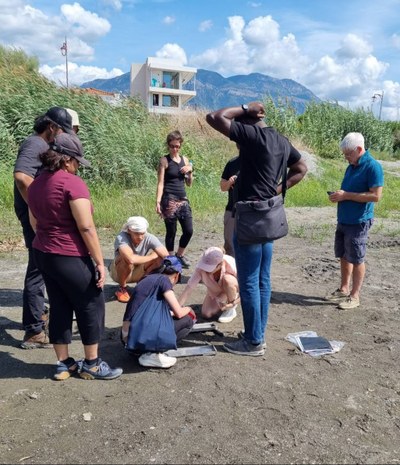
The Student Conference on Sunday gave early-career researchers from Greece and Germany the opportunity to present their own work. On Monday, the Summer School offered hands-on workshops, including mapping methods using laser scanning and a sedimentological sampling exercise on the Nedon riverbed, led by M.Sc. Leonie Burneleit (RWTH Aachen) together with colleagues from Oldenburg and Sydney. Using a geoslicer, students took sediment cores and assessed sampling sites — work that feeds into Burneleit's PhD research on the organic-geochemical characterisation of the river and its influence on the Gulf of Messenia.
Excursion Through the Southern Peloponnese
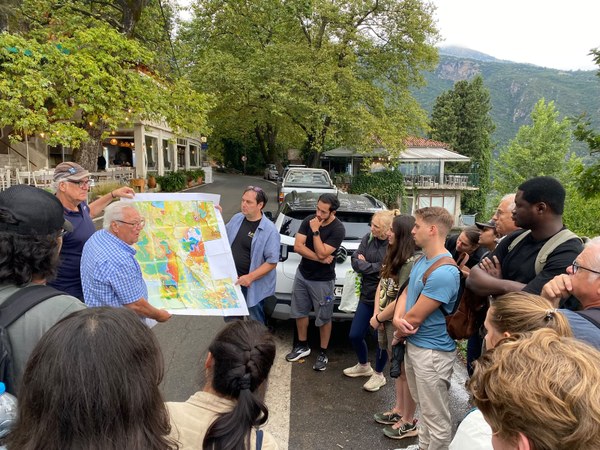
An excursion on Tuesday and Wednesday rounded off the programme. Tuesday focused on the region's geology, including the fold structures of the Taygetos mountains and a visit to the UNESCO World Heritage site of Mystras. On Wednesday, the group visited ancient Messene before continuing to Koroni, the southernmost point on the west coast of the Gulf of Messenia. At Koroni's old harbour, the trip came full circle: at the water-level gauge of the Greek National Tsunami Warning Centre (NOA), students could directly observe the exposure and vulnerability of Koroni and Petalidi.
Combining cutting-edge research, early-career support and hands-on fieldwork, Geoverbund ABC/J gave students from its network an intensive look into current geoscience.
